
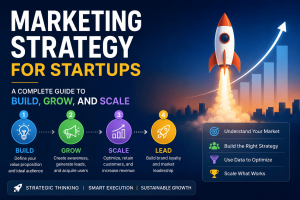
Marketing Strategy for Startups: A Complete Guide to Build, Grow, and Scale
Introduction
In today’s fast-changing digital world, building a startup is easier than ever, but growing it successfully is still a major challenge. Thousands of startups launch every year, yet only a small percentage manage to survive in the long term. One of the biggest reasons behind successful startups is having a powerful marketing strategy.
A well-planned digital marketing strategy helps startups attract customers, build brand awareness, and increase revenue. Whether you are running an e-commerce store, a tech company, or a service-based business, marketing plays a critical role in business growth.
This blog explains the most effective startup marketing techniques, including SEO strategy, content marketing strategy, social media marketing strategy, and search engine marketing to help startups grow in a competitive market.
Understanding Your Target Audience
Every successful marketing strategy starts with understanding the target audience. Startups need to know who their ideal customers are, what problems they face, and how the business can solve those problems.
Audience research includes studying:
- Customer interests
- Age groups
- Online behavior
- Buying habits
- Market trends
This process helps startups create personalized campaigns that improve engagement and conversions. A strong startup business plan always includes customer research because marketing becomes more effective when businesses clearly understand their audience.
For example, a startup selling fashion products to teenagers will use a completely different social media marketing strategy compared to a company targeting professionals.
Understanding customer needs also improves product development and customer satisfaction.
Building a Strong Brand Strategy
A powerful brand strategy helps startups stand out from competitors. Branding is not limited to logos or colors—it includes the complete identity of the business.
A strong brand identity includes:
- Business name
- Logo design
- Brand message
- Tone of communication
- Website design
- Social media presence
Successful startups maintain consistency across all platforms. Customers should recognize the same brand style on websites, advertisements, emails, and social media accounts.
For example, companies like Airbnb and Zomato became successful partly because of their strong branding and customer-focused communication.
An effective marketing plan ensures that branding creates trust and emotional connection with customers.
Creating a Digital Marketing Strategy
Modern startups depend heavily on a smart digital marketing strategy because online marketing is affordable and scalable. Unlike traditional marketing, digital platforms allow startups to reach targeted audiences with lower budgets.
The main components of a digital marketing strategy include:
- Search Engine Optimization (SEO)
- Content Marketing
- Social Media Marketing
- Email Marketing
- Paid Advertising
- Search Engine Marketing
Using multiple digital channels increases visibility and customer engagement. Startups can also track campaign performance in real time, making optimization easier.
A successful marketing strategy focuses on long-term customer relationships instead of only short-term sales.
SEO Strategy for Organic Growth
A strong SEO strategy is one of the most important tools for startup growth. SEO helps websites rank higher on search engines like Google, increasing organic traffic without spending large amounts on advertisements.
Important SEO practices include:
- Keyword optimization
- Mobile-friendly websites
- Fast loading speed
- High-quality content
- Backlink building
- Technical SEO improvements
Startups should focus on creating content around high-volume keywords related to their industry. For example, a startup selling fitness products can create blogs targeting keywords like “best workout tips” or “home fitness equipment.”
An effective search engine marketing approach combines SEO with paid campaigns to maximize visibility.
SEO is a long-term investment, but it provides sustainable traffic and improves brand authority over time.
Content Marketing Strategy: The Key to Engagement
A strong content marketing strategy helps startups educate, inform, and attract potential customers. Content marketing builds trust and positions businesses as industry experts.
Popular content formats include:
- Blog articles
- Videos
- Infographics
- Social media reels
- Podcasts
- Tutorials
High-quality content supports both SEO and customer engagement. Startups that consistently publish useful content often build loyal audiences faster.
For example, a tech startup can create tutorials and product guides, while a fashion startup can publish styling tips and trend updates.
Consistency is one of the most important factors in content marketing success. Posting regularly keeps customers engaged and improves search engine rankings.
A smart digital marketing strategy always includes valuable content creation.
Social Media Marketing Strategy
Social media has become one of the most powerful marketing tools for startups. Platforms like Instagram, LinkedIn, Facebook, and YouTube allow businesses to directly interact with customers.
A successful social media marketing strategy includes:
- Posting engaging content regularly
- Responding to customer comments
- Collaborating with influencers
- Running contests and giveaways
- Using short-form video content
Short-form videos such as Instagram Reels and YouTube Shorts currently generate high engagement and visibility.
Social media also helps startups build communities around their brands. Businesses that actively communicate with followers often create stronger customer loyalty.
Influencer collaborations are another effective strategy. Micro-influencers are especially useful for startups because they offer affordable promotions and higher engagement rates.
Search Engine Marketing for Faster Results
While SEO delivers long-term growth, search engine marketing provides faster visibility through paid advertising.
Platforms commonly used for paid advertising include:
- Google Ads
- Meta Ads
- YouTube Ads
Paid campaigns allow startups to target audiences based on demographics, interests, and online behavior. Even small advertising budgets can generate leads and sales when campaigns are optimized properly.
A balanced marketing strategy uses both organic and paid methods to maximize growth opportunities.
Startups should continuously test advertisements to identify which campaigns deliver the best return on investment.
Customer Retention and Email Marketing
Acquiring new customers is important, but retaining existing customers is even more valuable. Loyal customers often become repeat buyers and promote businesses through word-of-mouth marketing.
Customer retention strategies include:
- Personalized email campaigns
- Loyalty programs
- Fast customer support
- Feedback collection
- Exclusive offers and discounts
Email marketing remains one of the most effective digital marketing tools because it keeps businesses connected with customers.
A strong marketing plan focuses on long-term customer relationships instead of one-time sales.
Data-Driven Decision Making
Modern marketing relies heavily on analytics and performance tracking. Startups should regularly monitor:
- Website traffic
- Conversion rates
- Customer acquisition cost
- Return on investment (ROI)
- Social media engagement
Tools like Google Analytics help businesses understand customer behavior and campaign performance.
Data-driven decisions improve marketing efficiency and reduce unnecessary spending.
A successful digital marketing strategy continuously evolves based on data and customer feedback.
Conclusion
Building a successful startup requires more than a great product or service. A powerful marketing strategy is essential for attracting customers, building trust, and achieving long-term growth.
From creating a strong brand strategy to implementing effective SEO strategy, content marketing strategy, and social media marketing strategy, every step contributes to business success.
Startups that focus on creativity, consistency, and data-driven marketing can compete effectively even with limited budgets. By combining organic growth techniques with search engine marketing, startups can increase visibility, generate leads, and build loyal customer communities.
With the right startup business plan and a smart marketing approach, any startup can grow into a successful and recognizable brand in today’s competitive digital market.
Thank You Read
Winner Prizes
- Choose the Next Blog Topic – The winner gets the opportunity to suggest or choose the topic for an upcoming TechMatrix blog post.
- First Comment After Winning – The winner gets special recognition as the First Comment Winner on the next featured blog post.
- Get Featured as a Winner – Your name or username can be displayed in our Winner Section on the website.
Play → Comment → Win → Get Featured → Suggest the Next Topic!
🔎 Mystery 8
A startup has a great product but very few customers.
What should it investigate first?
A) Target audience
B) Office furniture
C) Company logo
D) Employee uniforms
