Introduction to B2C Business
Business to Consumer (B2C) is one of the fastest-growing business models in the digital era. It refers to companies selling products or services directly to individual customers through an ecommerce store, retail outlet, or ecommerce mobile app. Today, online shopping has become a daily habit, driven by convenience, variety, and attractive online shopping offers.
With the rise of smartphones and the internet, shopping apps India have transformed how consumers purchase products. From browsing an electronics online store to ordering from a grocery delivery app, B2C platforms provide seamless experiences along with best deals today and limited time offer discounts.
What is Business to Consumer (B2C)?
B2C is a model where businesses directly interact with end users. Unlike B2B, which deals with businesses, B2C focuses on individual consumers, fast decisions, and emotional buying behavior.
For example, when customers purchase from an ecommerce store, explore furniture online shopping platforms, or use a grocery delivery app, they are engaging in B2C transactions. Many platforms now offer buy now pay later options, making purchases more flexible and accessible.
Top Examples of B2C Companies
Some popular B2C companies dominating the market include:
- Amazon – A global ecommerce store offering best deals today
- Flipkart – One of the leading shopping apps India users prefer
- Nike – A direct-to-consumer brand with strong customer acquisition
- Zomato – A well-known grocery delivery app alternative for food
These companies focus heavily on customer satisfaction, fast delivery, and personalized services.
Types of B2C Business Models
1. Direct Sellers
Businesses sell products directly through their ecommerce store or ecommerce mobile app.
2. Online Intermediaries
Platforms connect buyers and sellers while promoting online shopping offers and limited time offer deals.
3. Advertising-Based Model
Free platforms generate revenue through ads and attract users for customer acquisition.
4. Subscription-Based Model
Customers pay regularly for services like OTT platforms.
5. Fee-Based Model
Businesses charge service fees while offering premium services or best deals today.
Key Features of B2C Business
- Direct communication with customers
- Focus on customer satisfaction and loyalty
- High competition among best shopping apps
- Quick buying decisions
- Use of ecommerce mobile app and digital platforms
- Attractive online shopping offers and limited time offer campaigns
Advantages of B2C Business
1. Large Customer Base
B2C businesses reach millions through ecommerce store platforms and shopping apps India.
2. Faster Sales Cycle
Offers like buy now pay later encourage quick decisions and increase conversions.
3. Strong Customer Acquisition
Digital marketing and online shopping offers help businesses attract new customers.
4. Brand Building
Consistent service improves customer satisfaction and trust.
5. High Profit Opportunities
Promotions such as best deals today and limited time offer deals increase revenue.
Challenges in B2C Business
- High competition among best shopping apps
- Constantly changing consumer preferences
- Customer retention difficulties
- High marketing and customer acquisition costs
- Dependence on technology like ecommerce mobile app
To overcome these challenges, businesses must innovate and focus on customer satisfaction.
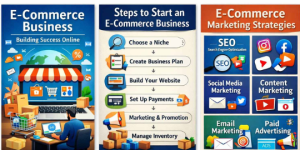
Effective Marketing Strategies in B2C
1. Personalization
Using AI in ecommerce mobile app platforms to suggest products based on user behavior.
2. Social Media Marketing
Promoting online shopping offers through Instagram, Facebook, and YouTube.
3. Influencer Marketing
Collaborating with influencers to improve customer acquisition.
4. Content Marketing
Blogs and videos promoting electronics online store and furniture online shopping platforms.
5. Email Marketing
Sharing updates, limited time offer deals, and best deals today notifications.
6. SEO Optimization
Targeting keywords like best shopping apps, ecommerce store, and shopping apps India.
Role of Technology in B2C Business
Technology is the backbone of modern B2C operations:
- Ecommerce mobile app improves accessibility and convenience
- Artificial Intelligence enhances personalization
- Chatbots improve customer satisfaction
- Data analytics helps in customer acquisition
- Automation streamlines ecommerce store operations
Top platforms use advanced tools to provide better online shopping offers and seamless experiences.
Future Trends in B2C Business
The future of B2C is driven by innovation and digital growth:
- Rapid expansion of shopping apps India
- Growth of ecommerce mobile app platforms
- Increasing popularity of buy now pay later services
- Rising demand for electronics online store products
- Growth in furniture online shopping
- Expansion of grocery delivery app services
- More personalized online shopping offers
Businesses providing best deals today and limited time offer campaigns will dominate the market.
Conclusion: The Future of B2C in Digital India
Business to Consumer (B2C) continues to evolve as one of the most powerful business models in the digital economy. With the growth of ecommerce store platforms, ecommerce mobile app technology, and shopping apps India, businesses can easily connect with customers and drive sales.
Focusing on customer satisfaction, offering buy now pay later options, and promoting best deals today are key to success. Companies that invest in technology, customer acquisition, and innovative marketing strategies will lead the future of online shopping.
For students and entrepreneurs, understanding B2C provides valuable insights into building successful businesses in areas like electronics online store, furniture online shopping, and grocery delivery app services.